Train-the-trainer evidence: document teaching ability before authorization

Short answer: Define an observable teaching task, record the assessment evidence and keep current teaching permission as a separate, scoped program decision.
Short answer
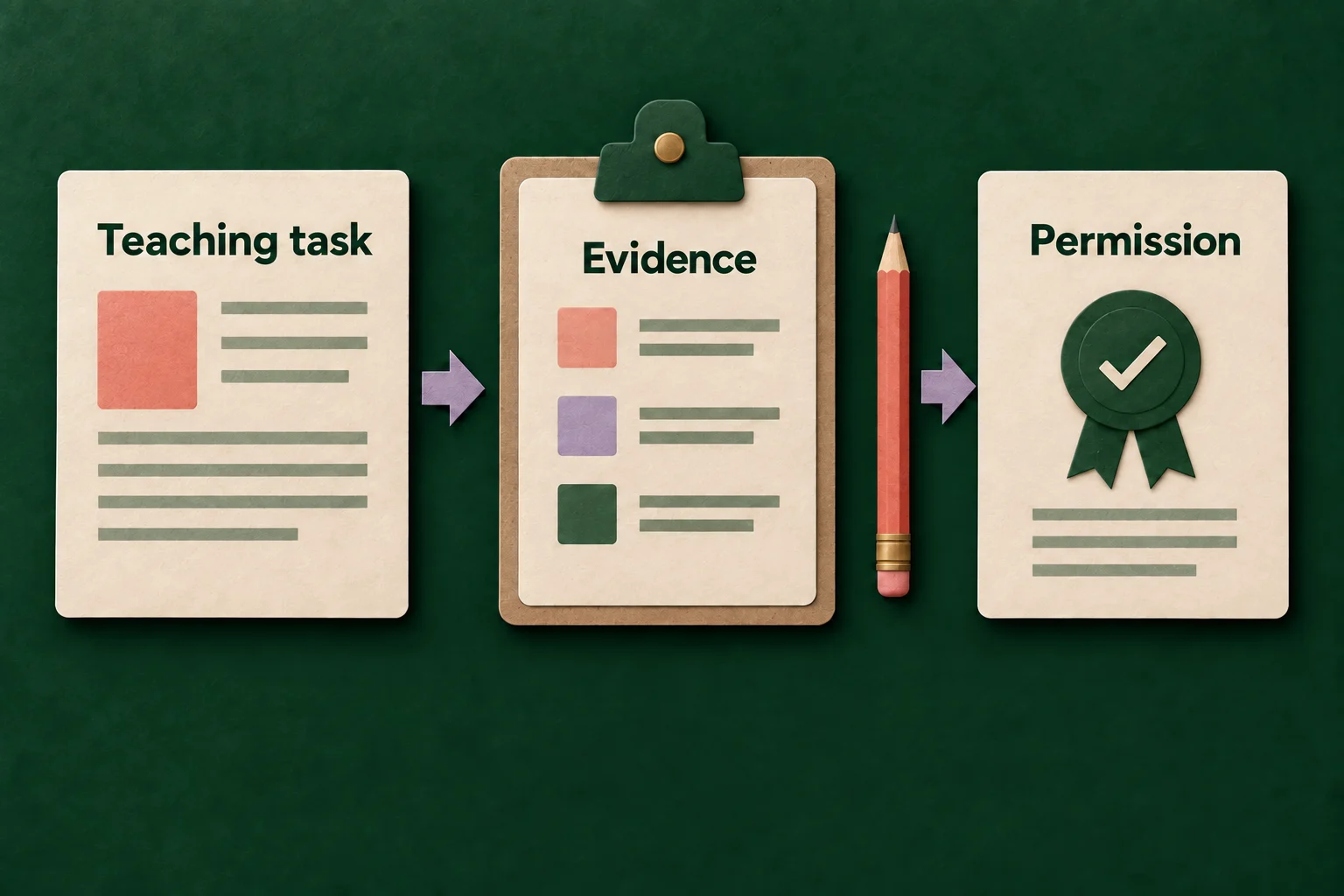
A train-the-trainer program should explain what an instructor demonstrated, not only which course they attended. Build an evidence record around an observable teaching task, then record any permission to teach as a separate, scoped decision. The practical model below is a suggested internal workflow, not a licensing standard or a substitute for a program’s own rules.
Start with a teaching task
Choose a task the candidate will actually perform: explain a procedure, facilitate a discussion, demonstrate a skill or give feedback on practice. Define what the observer should be able to see before selecting an assessment format. CDC’s learning-objective guidance recommends observable, measurable learner outcomes. Applied to instructor development, that means replacing a vague goal such as “understands training” with a concrete demonstration that an assessor can review.
For example, a program might ask a candidate to teach a short lesson using a supplied scenario, check the audience’s understanding and adapt the next explanation to the response. This is an illustrative assessment design, not a universal qualification requirement.
Keep observation and approval separate
The observer records what happened. The authorized program owner decides whether the evidence meets the program’s requirements and whether the person may teach within a defined scope. Do not turn an assessor’s positive comment into an unlimited permission claim.
Instructor authorization is a real operational responsibility in some programs. For example, the NIEHS description of the Partnership for Environmental Technology Education includes instructor authorization through training institutes and refresher courses. That example does not establish rules for unrelated industries.
Use a record like this as a starting point and adapt it to your program:
| Record | What to capture | What it does not establish |
|---|---|---|
| Demonstration | Lesson task, curriculum version, date and observation reference | Permission to teach every course |
| Assessment | Rubric version, observable result and assessor decision | Approval outside the assessor’s remit |
| Follow-up | Specific practice required and the evidence needed for another review | An automatic pass after time has elapsed |
| Authorization | Decision-maker, permitted curriculum, delivery context and conditions | A statutory licence or permanent permission |
For the general handoff from approved learning results to credential issuance, use the training-provider credential guide. The focus here is the instructor’s teaching evidence before that handoff.
Write a rubric that another observer can use
A useful rubric describes evidence, not personality. “Engaging trainer” is hard to audit. “Invites a response, identifies a misunderstanding and changes the explanation” gives a second observer something concrete to review.
The following is an original example, not a validated assessment instrument:
| Teaching dimension | Observable evidence | If the evidence is missing |
|---|---|---|
| Explanation | Connects the task to the stated lesson outcome | Ask for a revised explanation and another demonstration |
| Demonstration | Makes the relevant steps understandable in the chosen format | Identify the unclear step rather than guessing intent |
| Checking understanding | Uses a question or activity that reveals the learner’s understanding | Require an explicit check in the next attempt |
| Feedback | Responds to the observed learner performance with an actionable next step | Retain the specific gap for coached practice |
Set the decision rule before observing candidates. Record disagreements and the person responsible for resolving them. Do not invent a passing percentage merely to make the rubric look precise.
Handle conditional decisions explicitly
If a candidate needs more practice, identify the missing evidence and the next review action. If approval is limited to a curriculum or delivery mode, keep that limitation visible in the authorization record. When the program changes, decide whether an existing approval still covers the new task.
A course-completion record can remain a true statement about the past even when current teaching permission changes. Avoid using one undifferentiated “certified” label for both facts. Regulated programs need their responsible authority’s current requirements; this internal model does not supply them.
Communicate only the approved claim
Keep detailed observation notes in the controlled assessment record. Decide which approved criteria and limitations a recipient or verifier needs to understand, without exposing unnecessary personal or learner information.
Sertifier’s credential campaign guide documents fields including earning criteria, expiry and supporting documents. Those fields can help communicate a bounded credential claim. They do not replace an instructor assessment or make the platform the authority deciding who may teach.
Before building the campaign, write the exact claim and name its approving owner. Then use the campaign guide to map that approved information to the documented credential fields, and test the recipient verification journey with synthetic data. Confirm that a reader can distinguish demonstrated learning from current, limited teaching permission.
Map the approved claim to your credential
Use Sertifier’s documented campaign fields after your program owner has approved the evidence and claim.
Frequently asked questions
Does completing a trainer course prove teaching ability?
Only claim the outcome that the program actually assessed. Attendance or completion does not by itself document a successful teaching demonstration.
Is this rubric a qualification standard?
No. It is an example for designing a program-specific observation record. Validate its criteria with the people responsible for your training and assessment decisions before using it to approve instructors.
Where should current teaching permission be checked?
Use the program owner’s authoritative approval record and its stated scope. A credential can communicate the approved claim, but does not create a permission or replace a regulator’s requirements.