How to write a credential description: template and examples
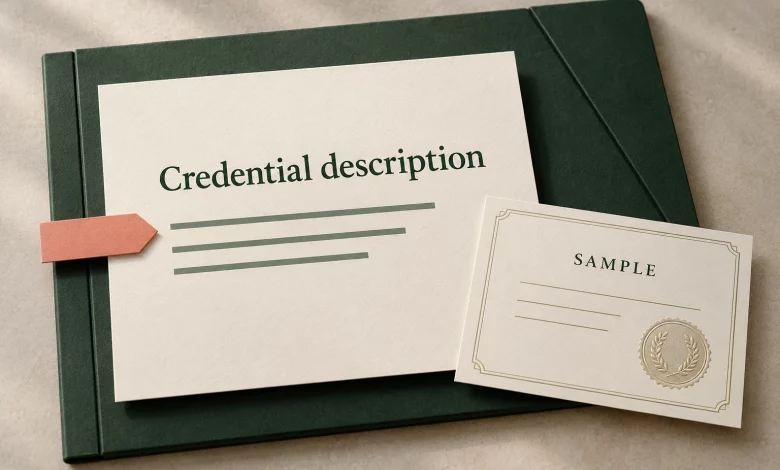
A credential description tells an outside reader what the award is about. It should identify the program, explain its scope and give enough context to interpret the title. Start with the approved program brief, not a sales slogan or a list of every activity the recipient completed.
Sertifier’s credential details guide describes the description field as a place for the credential’s purpose and relevant context. The structure below is an editorial approach for writing that text. It is not a mandatory template or a claim about automatic product behavior.
Give the reader context the title cannot carry
A title such as “Project planning foundations” names the award. The description can explain whether the program concerns internal project handoffs, construction scheduling or software delivery. Without that context, readers may attach a broader meaning than the issuer intended.
Use the description to answer three practical questions:
- What is this program? Name the activity or learning experience in plain language.
- What does it cover? Identify the main topics or tasks, using the approved curriculum.
- What is its context? Explain the intended audience or setting when that changes how the award should be understood.
The description is not the same as the conditions for earning the award. Keep attendance rules, completion requirements and assessment decisions in the appropriate explanation of credential earning criteria. Neither field should contradict the other.
A description template you can adapt
[Program name] introduces [defined audience, if relevant] to [subject and setting]. The program covers [specific topics or tasks]. [Add a relevant scope boundary or program-version reference when needed.]
Delete any part that adds no useful context. If the program is open to a broad audience, do not invent an entry requirement. If it has no formal level framework, do not label it “advanced” simply to make the credential sound more valuable.
Fictional description examples
The following examples are synthetic writing exercises, not real Sertifier customer programs or verified outcomes.
Workshop
Too vague: “An inspiring workshop that gives participants everything they need to succeed.”
More useful: “Project handoff workshop introduces team coordinators to preparing a handoff brief. Topics include recording open decisions, identifying the receiving owner and organizing links to approved project documents.”
The revision names a setting and concrete topics. It does not imply that attending the workshop proves independent professional competence.
Course
Too broad: “Become an expert in data analysis.”
More useful: “Spreadsheet reporting foundations introduces operations staff to organizing a reporting workbook. The course covers consistent column labels, basic data checks and documenting how a summary was prepared.”
This wording explains the course’s scope. Whether a recipient completed it or passed an assessment belongs in the award’s requirements and supporting records.
Internal program
Too internal: “Completed OPR Enablement V3.”
More useful: “Operations onboarding introduces new team members to the organization’s internal request-handling process. Topics include routing requests, maintaining handoff notes and locating the current procedure library.”
Spell out internal shorthand when the credential will be shared beyond the team. Keep confidential procedure details and private links out of the public text.
Remove claims the program cannot support
Review adjectives and outcome promises before polishing the prose. “Industry-leading,” “accredited,” “job-ready” and “expert” each add a claim that needs its own basis. Replace promotional language with the actual subject matter unless the issuer has approved evidence for the stronger statement.
Do not turn a program objective into an individual achievement. “The course introduces planning techniques” describes content. “The recipient can lead complex projects” makes a claim about a person. Use the latter only when the award is designed to recognize that ability and the supporting assessment justifies it.
A description also should not promise employment, promotion, credit transfer or recognition by another institution without a verified basis. If the credential has a limited internal purpose, say so clearly rather than relying on an impressive title.
Review the description as part of the credential
- Read the title and description together. Remove repetition and explain ambiguous terms.
- Compare the topics with the approved program brief. Remove content that was not part of the relevant version.
- Check the earning criteria. Keep the description within the same attendance, completion or assessment scope.
- Review any linked material using the supporting-document link checklist.
- Read a synthetic sample as an external viewer. Confirm that the explanation still makes sense without internal knowledge.
Keep the approved wording with the program record. When a curriculum changes, decide which version the new description represents before editing credentials already issued to an earlier cohort.
Frequently asked questions
How long should a credential description be?
Use enough text to explain the program’s scope without repeating its entire syllabus. A short, concrete description is preferable to a longer paragraph that adds only promotional language. Check the actual credential page before sending.
Can I reuse the description across programs?
Reuse the writing structure. Reuse the text only when the programs genuinely share the stated scope and context. Similar titles do not establish that the underlying content is the same.
Prepare your sample credential
Create a Sertifier workspace and prepare a synthetic sample using your approved program description. Review the title, context and earning criteria together before issuing credentials to real recipients.