Professional Development Credentials: A Verification-Ready Framework (Not Just Certificates)
Professional development programs are often judged by what they can prove, not just what they provide. If your program still relies on a static certificate of completion, you may be creating administrative work without creating durable, verifiable value for learners or employers.
This guide outlines a verification-ready framework for professional development credentials: what to define, how to govern it, what to measure, and how to communicate value. The goal is simple: make your credentials portable, trustworthy, and easy to audit.
Key takeaways
- A certificate of completion is not a credential system. Verification, governance, and skills alignment are what make a credential durable.
- Start with outcomes and evidence. Define what a learner can do and what counts as proof.
- Governance prevents credential drift. Versioning, reviews, and revocation rules protect credibility.
- Measure verification events, not just completions. Track what gets shared, checked, and trusted.
- Use a taxonomy to scale. Micro-credentials and stacks keep your catalog consistent as programs grow.
The problem with traditional PD certificates (and why verification matters)
Many professional development programs still issue a PDF certificate or a generic “completion” record. That works for a quick handoff, but it breaks down when learners need proof for HR, licensure, audits, or new employers.
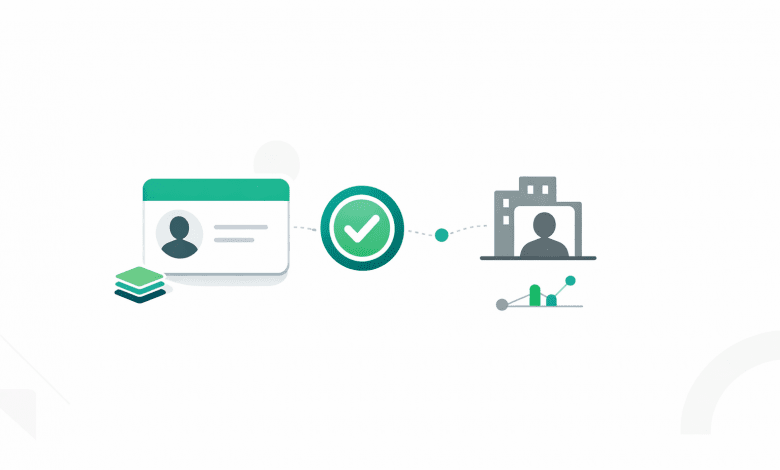
A verification-ready credential is different. It is designed to answer basic questions reliably: Who earned it? What did they do to earn it? When was it earned? Is it still valid? Can an employer verify it without contacting your team?
Common failure modes of traditional certificates include:
- No verification path. Employers can’t confirm authenticity without manual outreach.
- Weak meaning. A “certificate” may not specify outcomes, assessments, or proficiency.
- Record inconsistency. Names, dates, course versions, and criteria drift over time.
- Low portability. Learners can’t easily share credentials in channels they already use.
- Compliance gaps. Continuing education often requires defensible evidence and retention practices.
If your team is responsible for reporting, audits, or stakeholder confidence, verification is not a “nice to have.” It’s a control point that protects your program’s credibility.
Build a PD credential system: outcomes, assessments, governance, and issuance
A professional development credential system is a repeatable way to define, issue, verify, and maintain credentials over time. The system matters more than the artifact.
Use this four-part structure to design your credentials so they stand up to employer scrutiny.
- Outcomes: Define observable skills or competencies learners should demonstrate, including communication outcomes where relevant (for example, “deliver structured stakeholder updates” rather than “improve communication”).
- Assessments: Specify the evidence required to earn the credential (rubrics, scored projects, proctored checks, instructor review, or validated performance artifacts).
- Governance: Assign owners for criteria, reviewers for evidence, rules for updates, and conditions for revocation.
- Issuance + verification: Issue digital credentials with a verifiable record that can be checked by third parties without extra manual work.
If your team is evaluating approaches, it helps to separate “document issuance” from “credential management.”
| Approach | What it’s good for | Where it fails | Verification readiness |
|---|---|---|---|
| PDF certificate of completion | Simple participation acknowledgment | Easy to copy, hard to verify, unclear criteria | Low |
| Manual registry (spreadsheet or portal lookup) | Basic confirmation if someone contacts you | Doesn’t scale, creates support load, limited context | Medium (manual) |
| Digital badge / digital credential with verification | Portable proof with embedded criteria and metadata | Requires upfront definition and governance | High |
| Credential system with taxonomy (micro-credentials and stacks) | Scalable catalog, consistent records, skills mapping | Needs program ownership and change management | High (systematic) |
If you’re new to digital badges and Open Badges, start with the concept of a credential that includes structured data (issuer, criteria, evidence, and verification). For background, see the Open Badges specification.
Asset: Professional Development Credential Program Playbook (90-day launch plan)
This playbook is designed for L&D teams, continuing education providers, and program managers who need to launch verification-ready credentials without redesigning everything at once.
Use the plan to move from “we issue certificates” to “we manage credentials” with clear decision points and ownership.
Week-by-week implementation checklist
- Weeks 1–2: Define scope and credential types
- Select one pilot program with stable content and clear outcomes.
- Decide what you’re issuing: certificate of completion, skill badge, micro-credential, or a stackable pathway.
- Identify what must be verifiable (identity, completion, assessment, CE hours, validity period).
- Weeks 3–4: Write outcomes and criteria
- Draft 3–7 outcomes per credential (observable, job-relevant).
- Define assessment requirements and minimum thresholds.
- Write plain-language criteria for learners and employers.
- Weeks 5–6: Build assessment and evidence workflow
- Choose evidence types (rubric-scored assignment, recorded presentation, supervisor attestation, exam).
- Standardize file naming and evidence retention rules.
- Confirm who reviews what, and what happens when evidence is incomplete.
- Weeks 7–8: Governance + versioning
- Assign criteria owners and reviewers.
- Define versioning rules for content changes (what triggers a new version vs. a minor update).
- Document revocation and re-issuance conditions.
- Weeks 9–10: Configure issuance and verification
- Set credential metadata fields (name, description, criteria, issuer, issue date, expiration if applicable).
- Test the verification experience from an employer viewpoint.
- Confirm export/reporting needs for internal stakeholders.
- Weeks 11–12: Launch + improve
- Launch to a defined cohort.
- Collect feedback on clarity, shareability, and verification steps.
- Fix friction points and finalize the template for reuse.
Governance model: reviewers, criteria owners, and revocation/updates
Governance is what keeps credentials meaningful after the launch. Without it, criteria drift and employers lose confidence.
- Program owner: Accountable for credential intent, audience, and alignment to business or CE requirements.
- Criteria owner: Maintains outcomes, assessment rules, and rubric definitions; approves changes and versions.
- Reviewer(s): Evaluates evidence against criteria; documents decisions and exceptions.
- Credential operations: Handles issuance rules, learner support, reporting, and escalations.
- Compliance/legal (as needed): Reviews retention, consent, audit requirements, and branding claims.
Update and revocation rules to define up front:
- When criteria change: Decide whether previously issued credentials remain valid, require a new version, or need re-assessment.
- When misconduct or errors occur: Define revocation triggers (identity fraud, administrative error, policy violation) and notification steps.
- Expiration: If applicable, define renewal requirements and what “expired” means in verification.
Metrics framework: adoption, completion, sharing, and verification events
Completions are not enough to judge a credential program. You want to know whether the credential is used and trusted after issuance.
- Adoption: Issued credentials vs. eligible learners; uptake by program/cohort; issuance error rates.
- Completion: Assessment completion, pass/fail outcomes, time-to-complete (used cautiously and contextually).
- Sharing: Saves, shares, and additions to professional profiles where available.
- Verification events: How often third parties verify; which channels drive checks; common verification drop-offs.
Make sure your credentialing approach supports the reporting your stakeholders actually need. For example, continuing education often needs defensible historical records, while L&D leadership may care more about skills coverage and internal mobility signals.
How to map PD to job-relevant skills (and keep records consistent over time)
If your credential doesn’t translate to workplace expectations, it’s harder for employers to value and for learners to use. Skills mapping is how you close that gap.
A practical approach:
- Start from tasks, not topics. Define what the learner can do on the job (for example, “write a customer escalation summary” rather than “communication basics”).
- Define proficiency signals. Describe what acceptable performance looks like (rubric language, passing criteria, required artifacts).
- Keep a stable skills dictionary. Use consistent skill names and definitions across programs to avoid duplicate or conflicting records.
- Version carefully. If a skill definition changes, keep the old version tied to past credentials and the new version tied to future issuance.
If your organization is moving toward portable learner records, plan for how credential data will be represented and exported. A Learner and Employment Record (LER) approach can help structure and transport learning achievements across systems; see 1EdTech’s LER overview for context.
Creating a repeatable credential taxonomy (micro-credentials and stacks)
Taxonomy is what makes credentialing scalable. Without it, every new program becomes a one-off, and reporting becomes messy.
Define credential types and rules that your team can reuse:
- Certificate of completion: Participation-based; should still include criteria and a verification method if used for compliance or reporting.
- Micro-credential: Competency-based; requires evidence and assessment tied to defined outcomes.
- Stack: A structured pathway where multiple micro-credentials roll up to a larger credential (role-based, level-based, or domain-based).
Taxonomy rules to document:
- Naming conventions: Use consistent titles that reflect the skill or capability, not internal course codes.
- Metadata standards: Required fields (outcomes, criteria, assessment type, issue/expiry rules, version).
- Stack logic: What combinations qualify, who approves exceptions, and how updates affect previously issued stacks.
If your credentials include digital badges, align them to widely recognized structures so they’re portable and easier to verify. Open Badges support embedding criteria and issuer data in a structured way; see the Open Badges specification.
How to communicate value to learners and employers (and improve engagement)
Even a well-designed credential can underperform if learners don’t understand how to use it or employers don’t know what it represents.
Communication should do three things: clarify meaning, reduce effort to share/verify, and set expectations.
- For learners: Explain what the credential proves, how it was assessed, and how to share it. Provide a short script they can use in applications or performance reviews.
- For employers: Make criteria and evidence expectations easy to scan. Provide a clear verification path that doesn’t require contacting your team.
- For internal stakeholders: Show how credentials map to skills, programs, or compliance requirements, and how records will be maintained over time.
Common engagement pitfalls:
- Overpromising. Don’t imply a credential guarantees job outcomes; focus on verified learning and demonstrated skills.
- Vague criteria. Employers disengage when outcomes read like marketing copy rather than measurable performance.
- Inconsistent language. If the credential title, description, and outcomes don’t match, trust drops.
Decision checklist: choosing a verification-ready professional development credential approach
- Verification: Can a third party verify authenticity and validity without manual support?
- Criteria transparency: Are outcomes, assessments, and evidence expectations clearly documented?
- Governance: Do you have named owners, versioning rules, and revocation/update policies?
- Reporting: Can you export records and produce audit-friendly documentation when needed?
- Portability: Can learners share credentials in common professional channels and applications?
- Security and privacy: Are access controls, data handling, and retention aligned with your policies?
- Scalability: Can you reuse templates across programs and support micro-credentials and stacks?
Implementation steps (for L&D teams, CE providers, and program managers)
- Pick one pilot credential. Choose a professional development program with stable content and clear outcomes.
- Define outcomes and assessments. Include at least one job-relevant communication outcome if it’s a program goal, and tie it to evidence.
- Write governance rules. Owners, reviewers, versioning, and revocation/update policies.
- Issue digital credentials with verification. Ensure the credential record includes criteria and can be verified externally.
- Measure beyond completion. Track sharing and verification events to understand real-world value.
- Standardize taxonomy. Convert your pilot into a template for micro-credentials and stacks.
People Also Ask (FAQ)
- What is the difference between a professional development certificate and a digital credential?A certificate is often a document that confirms participation or completion. A digital credential is a verification-ready record that can include structured criteria, issuer identity, assessment expectations, and a way for third parties to confirm it’s authentic.
- Do I still need a certificate of completion?Sometimes, yes. A certificate of completion can be useful for participation tracking or CE documentation. The decision point is whether you need third-party verification, consistent records over time, and defensible criteria.
- How do digital badges relate to professional development?Digital badges are a common format for professional development credentials, especially for micro-credentials. When aligned to Open Badges, they can carry embedded criteria and issuer data to support portability and verification.
- What should be included in a verification-ready credential?At minimum: issuer identity, recipient identity, issue date, credential name, criteria/outcomes, and a verification method. If the credential expires or can be revoked, include those rules in the verification experience.
- How do we prevent credential criteria from changing too often?Use governance: assign criteria owners, define versioning triggers, and document what happens to previously issued credentials when updates occur.
- How do we show employers what the learner can do?Use job-relevant outcomes and specify what evidence was required. For communication skills, describe the actual performance (such as a structured presentation or stakeholder update) and how it was assessed.
Conclusion: make professional development credentials verifiable, governed, and reusable
Professional development doesn’t need more certificates. It needs credentials that are easy to verify, consistent over time, and mapped to real outcomes. When you combine clear criteria, assessment evidence, governance, and digital issuance, you get a credential system that supports reporting, reduces manual verification work, and improves employer trust.
If your team is fielding verification requests, struggling with inconsistent records, or trying to scale micro-credentials across programs, a verification-first approach reduces risk and support burden while making your credentials easier to use.