Credentials Explained: A Field Guide to Digital Credentials, Verification, and Trust Signals
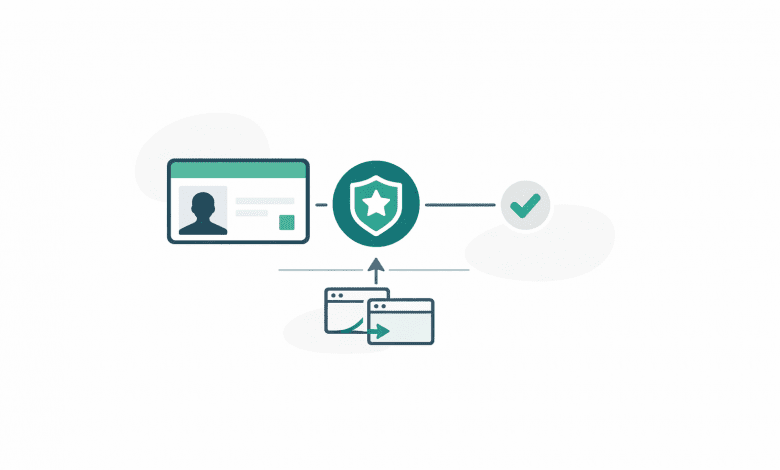
Credentials are how programs prove that a person met defined requirements—skills, training completion, continuing education, or role readiness. As more learning and assessment moves online, the hard part isn’t issuing credentials; it’s making them easy to verify, hard to fake, and simple for earners to share across systems.
This field guide defines credential types, breaks down verification, clarifies where blockchain fits, and outlines governance and implementation decisions for US program owners and technical stakeholders.
Key takeaways
- Credentials are claims backed by evidence and issuer accountability, not just PDFs or profile screenshots.
- Certificates, badges, and certifications differ by purpose, rigor, and expected verification.
- Verification depends on identity, criteria, evidence, and issuer authenticity—not on the file format.
- Blockchain can help with tamper-evidence in some designs, but it’s not required for trustworthy credentialing.
- Portability and shareability come from standards-based metadata, stable URLs, and revocation/updates.
What “credentials” are (and what they are not)
Credentials are verifiable assertions that an individual achieved something under defined rules, issued by a recognized organization. A good credential includes clear criteria, a record of issuance, and a way for a third party to confirm validity.
Credentials are not:
- Just a file (PDF, image, screenshot). Files can be copied and edited without a verification trail.
- Just a marketing badge placed on a website without embedded criteria or issuer identity.
- Just a database entry that can’t be independently checked by employers, auditors, or partner organizations.
Decision lens: if a credential can’t be verified by someone who doesn’t have access to your internal system, it’s a completion artifact—not a trust signal.
Credential types: certificates, badges, and certifications
Credential programs often mix terms. The fastest way to reduce confusion is to decide what you are promising to verifiers (employers, customers, regulators, partner orgs) and what you want earners to do with the credential.
Certificates
A certificate commonly indicates completion of training or participation in a learning experience. The rigor varies widely, so verification should clarify what was required (attendance, assessment, passing score, hours, etc.).
Digital badges (badging)
Badging typically refers to issuing digital badges that carry structured metadata: issuer, criteria, evidence links, issue date, expiration, and more. Badges are designed to be shared and verified in context, not just displayed.
Certifications
A certification generally signals that the earner met a defined competency standard, often tied to an exam or formal assessment process. Certifications tend to require stronger governance: identity controls, retake rules, expiration/renewal, and revocation.
Comparison table: how to choose by program intent
| Type | Best for | Typical verification expectation | Key design decision |
|---|---|---|---|
| Certificate | Course completion, CE participation, internal enablement | Confirm issuer, learner, date, and completion criteria | Define what “completion” means and how it’s evidenced |
| Digital badge | Skills signaling, micro-credentials, stackable pathways | Verify embedded metadata: criteria, issuer, evidence, status | Choose a metadata model and sharing/hosting approach |
| Certification | Role readiness, compliance, high-stakes validation | Verify identity, assessment integrity, validity period, revocation | Governance: who can issue/revoke, how updates are handled |
Asset: Digital Credential Glossary (plain-English definitions and examples)
Use this glossary to align program, product, legal, and engineering on the same terms.
- Credential: A verifiable claim that an earner met defined requirements. Example: “Completed Vendor X Admin Training with a passing assessment.”
- Digital credential: A credential issued and verified digitally, usually via a unique URL and machine-readable metadata. Example: A credential page with criteria, issuer info, and status.
- Digital badge: A digital credential optimized for sharing, with embedded metadata and a verification method. Example: A badge that links to criteria and evidence of work.
- Micro-credential: A smaller-scope credential that validates a specific skill or competency. Example: “SQL joins” or “Customer onboarding basics.”
- Issuer: The organization that asserts the credential and is accountable for its rules. Example: A training provider, association, university, or employer program.
- Earner: The individual who receives the credential. Example: A learner, member, employee, or partner.
- Criteria: The requirements to earn the credential. Example: “Complete modules A–D and pass the final exam.”
- Evidence: Supporting artifacts demonstrating the criteria were met. Example: Portfolio links, assessment results, supervisor sign-off.
- Verification: A method for a third party to confirm the credential is valid, issued by the stated issuer, and not revoked/expired. Example: A verification page showing current status.
- Revocation: The issuer invalidates a credential after issuance. Example: Academic integrity violation or policy breach.
- Expiration/renewal: A credential becomes invalid after a date unless renewed. Example: Annual compliance credential renewal.
- Open Badges: A technical standard for interoperable digital badges with portable metadata. Reference: IMS Global Open Badges specification.
- LER (Learner Employment Record): A record format that can include credentials and skills assertions for education-to-employment use cases. Reference: 1EdTech LER overview.
- Certifications on resume: How earners represent credentials in job applications. Example: Listing a certification name plus a verification link or credential ID.
Verification 101: identity, criteria, evidence, and issuer authenticity
Verification is the core of trust. A verifier’s question is simple: “Should I believe this credential?” Your system needs to answer that question consistently.
1) Identity: who is the earner?
At minimum, verification should confirm the credential was issued to the person presenting it. Identity practices vary by risk level.
- Low-stakes programs: Email-based issuance may be sufficient.
- Higher-stakes programs: Consider stronger identity checks during assessment and issuance, plus audit logs.
2) Criteria: what exactly was required?
Criteria should be explicit and accessible from the credential itself (or its verification page). Avoid vague statements like “completed training” without defining the passing condition.
3) Evidence: what supports the claim?
Evidence can be optional, but it’s often the difference between a “nice-to-have” credential and a credential that hiring managers and partners can evaluate. Evidence can include links, rubrics, project artifacts, or assessment summaries—while respecting privacy constraints.
4) Issuer authenticity: is the issuer real and accountable?
Verification should clearly show who issued the credential, how to contact the issuer, and whether the credential is currently valid. For technical stakeholders, this often means stable URLs, signed assertions, and a status check that reflects revocation or expiration.
Common failure modes to avoid
- PDF-only issuance with no live verification page or status.
- Criteria drift where requirements change but old credentials don’t reflect what was required at the time.
- No revocation path when a credential must be invalidated.
- Broken links due to platform migrations or URL changes.
- Over-sharing evidence that exposes sensitive learner data.
Security and procurement considerations
- Data minimization: Publish only what verifiers need to know; keep sensitive evidence behind appropriate access controls.
- Auditability: Ensure issuance and status changes are logged and attributable.
- Availability: Verification should work reliably for external parties without requiring accounts.
- Integration: Confirm how the credential platform connects to your LMS, assessment tools, and identity provider (if applicable).
Where blockchain fits (and where it doesn’t) in credentialing
Blockchain is sometimes used to provide tamper-evidence for credential records, typically by anchoring a hash or reference that can be checked later. In credentialing discussions, it’s important to separate what blockchain can do from what your program actually needs.
Where blockchain can fit
- Tamper-evidence: Prove that a record hasn’t changed since it was anchored.
- Independent verification patterns: Support designs where a verifier can check integrity without relying solely on the issuer’s database.
Where blockchain doesn’t replace the basics
- Issuer accountability: A blockchain record doesn’t tell you whether the issuer is credible.
- Criteria quality: Immutable storage doesn’t make weak criteria meaningful.
- Identity proofing: Blockchain doesn’t solve “was this person actually assessed?”
- Revocation UX: Your program still needs a clear way to show status (valid/expired/revoked) to everyday verifiers.
Practical decision rule: if your verifiers are primarily employers, customers, or partner teams who want a simple status check, prioritize a clear verification experience and governance first. Evaluate blockchain only if it directly supports your required verification model.
What makes a credential “shareable” and “portable”
A credential is shareable when an earner can post it where opportunities happen (LinkedIn, email, personal site, applications) and a verifier can understand it quickly. It is portable when it remains verifiable across platforms and over time.
Shareable signals
- Human-readable summary: What it is, who issued it, and why it matters.
- One-step verification: A stable URL that shows current status.
- Resume-friendly representation: A consistent name, issuing org, issue date, and verification link for certifications on resume.
Portable design choices
- Standards-based metadata: Use interoperable formats (for badges, align with Open Badges where applicable).
- Stable identifiers: Keep credential URLs and IDs durable even through system changes.
- Lifecycle support: Expiration, renewal, revocation, and updates must be reflected in verification.
Governance model: who can issue, revoke, and update credentials
Governance is the operational backbone of trust. Define it before scaling issuance.
Core roles to map
- Program owner: Defines credential taxonomy, criteria, and policy; cares about integrity and outcomes.
- Content/assessment lead: Maintains criteria and evidence; cares about validity and consistency.
- Operations/admin: Manages issuing workflows and exceptions; cares about speed and accuracy.
- IT/security: Reviews access control, audit logs, integrations, and data handling; cares about risk.
- Legal/privacy: Reviews what data is displayed and stored; cares about compliance and consent.
- External verifiers (employers/partners): Want a fast, reliable way to confirm authenticity.
Governance decisions to make explicit
- Issuance authority: Which teams (or partners) can issue which credentials?
- Approval workflow: Do credentials require review before issuance?
- Revocation policy: What triggers revocation and who executes it?
- Update policy: If criteria change, do existing credentials remain as-is, get versioned, or require renewal?
- Exception handling: Name changes, email changes, duplicates, and appeals.
Implementation steps (for program owners and technical teams)
- Define your credential taxonomy: List each credential, type (certificate/badge/certification), intended audience, and purpose.
- Write criteria and evidence rules: Make criteria verifiable and decide what evidence is shown publicly vs stored privately.
- Design verification: Decide what a verifier sees (status, issuer, criteria, dates, ID) and how they access it (public page, API, or both).
- Set lifecycle policies: Expiration, renewal requirements, revocation reasons, and versioning approach.
- Map integrations: Identify systems of record (LMS, assessment, CRM) and define the issuance trigger.
- Lock governance and access controls: Roles, permissions, audit logging expectations, and admin processes.
- Pilot and review: Run a small cohort, test verification externally, then refine criteria wording and workflows.
Decision checklist
- Clarity: Can a verifier understand the criteria in under a minute?
- Verification: Can someone outside your org confirm authenticity and current status?
- Portability: Will the credential remain valid and accessible if systems change?
- Governance: Are issuing, revoking, and updating responsibilities documented and enforced?
- Privacy: Are you sharing only what’s necessary and appropriate?
- Operational fit: Can your team issue at scale without manual rework?
People Also Ask: Credentials, verification, and trust signals
What is the difference between a certificate and a certification?
A certificate usually confirms completion of a learning experience. A certification usually confirms competence against a defined standard, often requiring stronger assessment, identity controls, and lifecycle management (renewal/revocation).
Are digital badges real credentials?
They can be. A digital badge is a credential when it includes issuer identity, criteria, and a reliable verification method. A badge image alone is not a verifiable credential.
How should people list certifications on resume?
Use the credential name, issuing organization, issue date (and expiration if relevant), and a verification link or credential ID when available. The goal is to make verification straightforward for hiring teams.
Do I need blockchain for credential verification?
No. Many credential programs rely on issuer-hosted verification pages, signed metadata, and revocation/expiration status. Blockchain can support certain integrity designs, but it does not replace governance, criteria, or identity controls.
What makes a credential portable?
Portability comes from durable identifiers (stable URLs/IDs), standards-aligned metadata (where applicable), and lifecycle support so the credential’s status is accurate over time.
Next step: manage and verify credentials with Sertifier
If your program needs credentials that are easy to issue, simple to verify, and ready to share, the next step is choosing a credentialing workflow that supports metadata, verification, and lifecycle governance without creating extra operational burden.
To evaluate fit, start with your credential types (certificates, badges, certifications), define verification requirements (what a verifier must see), and confirm governance (who can issue, revoke, and update). Then align your issuance triggers with your learning or assessment systems.
- Explore Sertifier’s digital credentialing platform
- Read more about digital badges, verification, and credential management
Want practical guidance you can apply to your credential program? If you’re balancing program integrity, verification needs, and implementation details across stakeholders, a steady stream of clear definitions and workflow patterns helps you move faster with fewer reworks.